One Day, Five Locations: Filming Science at Carnegie for Quanta Magazine
In June 2025 Quanta Magazine asked me to film mineralogist Robert Hazen and astrobiologist Michael Wong at Carnegie Science’s campus on Broad Branch Road in northwest Washington. They had proposed a new "law of increasing functional information" — the idea behind Quanta’s film Is Information the Fifth Force of Nature?, which is on the portfolio.
It was a classic science-documentary day: interviews in the morning, then following the scientists through their spaces in the afternoon. My assistant and I handled everything on location; the producer joined the interviews virtually from New York.
The schedule
This was the plan the producer sent the afternoon before:
| Time | Scene |
|---|---|
| 8:00 | Load in to the library reading room |
| 9:30–10:45 | Interview with both scientists together |
| 11:00–12:00 | Individual interviews |
| 12:00–1:00 | Wrap out, move to the research building, lunch |
| 1:00–1:30 | Astronomy library — the pair working at the blackboard |
| 1:45–2:30 | Bob’s office — preparing samples |
| 2:45–3:30 | Mike in the GC-MS lab, testing samples |
| 3:45–5:00 | Interior and exterior b-roll on campus |
Five locations in one day, plus a company move at lunch.
Interviews: one room, three setups
The morning started with a two-person interview and then two single interviews in the same library reading room. That means one lighting plan that works for a two-shot and can be adjusted quickly for each singles setup, without breaking down.
I asked in advance whether we could leave some gear in the library after the interviews. On a day with a company move, not having to pack everything at noon buys real time in the afternoon.
The afternoon: following the work
Science documentaries live or die on b-roll of real work: chalk on a blackboard, samples being prepared, an instrument running. The schedule was built around what the scientists actually do, and it stayed flexible — the evening before, the scientists and producer reshuffled the order so experiments could run over lunch.
For the DP that means:
- Lighting that moves fast. Small LED units and practicals, not a full interview setup in every room.
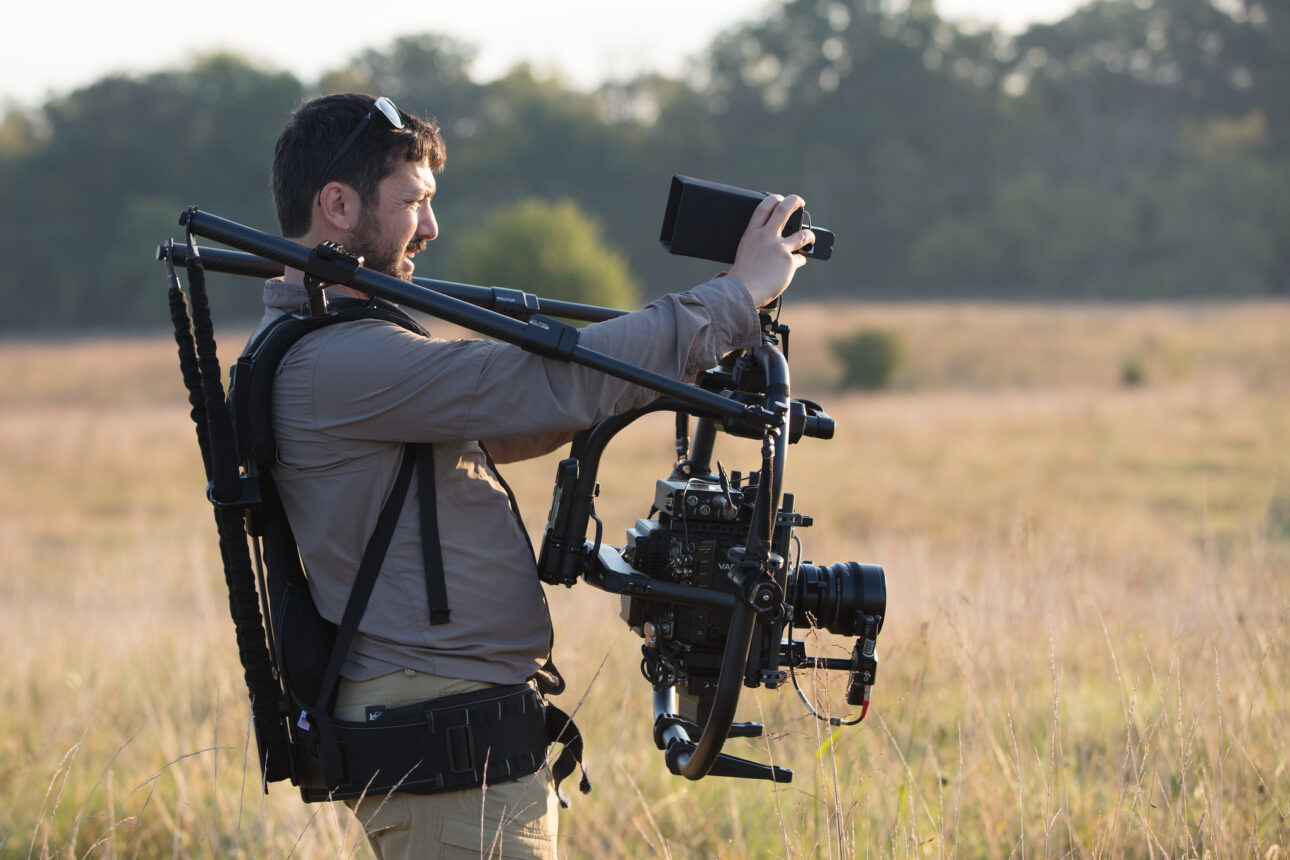
- Shooting on the move. Handheld or a gimbal for the lab, where you follow the process rather than staging it.
- Respecting the lab. Instruments and samples come first; the camera fits around them.
Why this kind of day works
A day like this works because the producer sends a clear plan the day before, the scientists are generous with their time, and the crew is small enough to move quickly between rooms. It’s the same approach I bring to documentary shoots across Washington.
See more documentary work, or how I work in DC.
Umit Gulsen is a Washington, DC Director of Photography with 20+ years behind the lens. About · Work · Book a shoot